
The first few moments, days, and weeks after you give birth mark the beginning of a profound healing journey. We often call it the 'fourth trimester,' and it's not a race back to your old self. Think of it as a gentle, winding path that asks for your patience and the right support system—your postpartum recovery essentials.
Getting these items ready ahead of time is more than just stocking up. You're thoughtfully creating a sanctuary for yourself, a nurturing space that honors what your body has just accomplished and sets you up for a more peaceful, supported recovery.
Welcome to the Fourth Trimester: Your Healing Journey
Let's reframe the weeks after birth. This isn't just "after"; it's a critical transition period that deserves just as much thought and preparation as pregnancy itself. The focus now shifts from growing your baby to healing your own body, finding a new rhythm with your newborn, and forging that incredible bond. It's a time of massive physical and emotional change, and your well-being is the bedrock for your family's.
Unfortunately, our culture often glosses over this crucial time. New parents frequently feel an unspoken pressure to "bounce back" in record time, pushing aside their body's clear signals for rest and dedicated care. Rushing the process doesn't work; it often leads straight to burnout and can make healing much more complicated.
The Reality of Postpartum Healing
The reality is, the challenges of postpartum are often swept under the rug, and the numbers tell a stark story. Every single year, at least 40 million women around the world find themselves dealing with long-term health problems that started with childbirth. That means more than one-third of new mothers face ongoing issues like chronic back pain, anxiety, or depression.
What’s even more shocking? A major review of medical research revealed that for 40% of the 32 most common postpartum conditions, there are no high-quality treatment guidelines. This points to a huge gap in care, which you can read more about in this report from the WHO.
This is precisely why putting together your own kit of postpartum recovery essentials is so incredibly important. It's an act of self-advocacy. You’re taking charge of your own healing by surrounding yourself with practical tools that address both your physical comfort and your emotional needs.
By building your recovery toolkit, you’re sending a powerful message to yourself: "My healing matters. My comfort is a priority. I am worthy of this care."
Shifting Your Mindset
Leaning into this period means consciously shifting your mindset from one of expectation to one of deep compassion for yourself. Instead of getting caught up in what you "should" be doing, you can gently turn your focus to what your body and mind truly need in this moment.
Think of this guide as a conversation, walking you through not just what you need, but why each item plays such a vital role.
Your postpartum kit should be built around a few key areas:
- Physical Healing: Tools for perineal care, C-section incision care, and managing general aches and pains.
- Comfort and Support: Soft, non-restrictive clothing and gentle, supportive undergarments.
- Nourishment: Essentials for staying hydrated and getting the nutrient-dense fuel your body craves.
- Emotional Well-being: Resources and small comforts that support your mental health through this huge life change.
By the time you're done here, you’ll have a clear, practical roadmap for creating a recovery nest that feels supportive, comfortable, and truly empowering.
Building Your Physical Recovery Toolkit
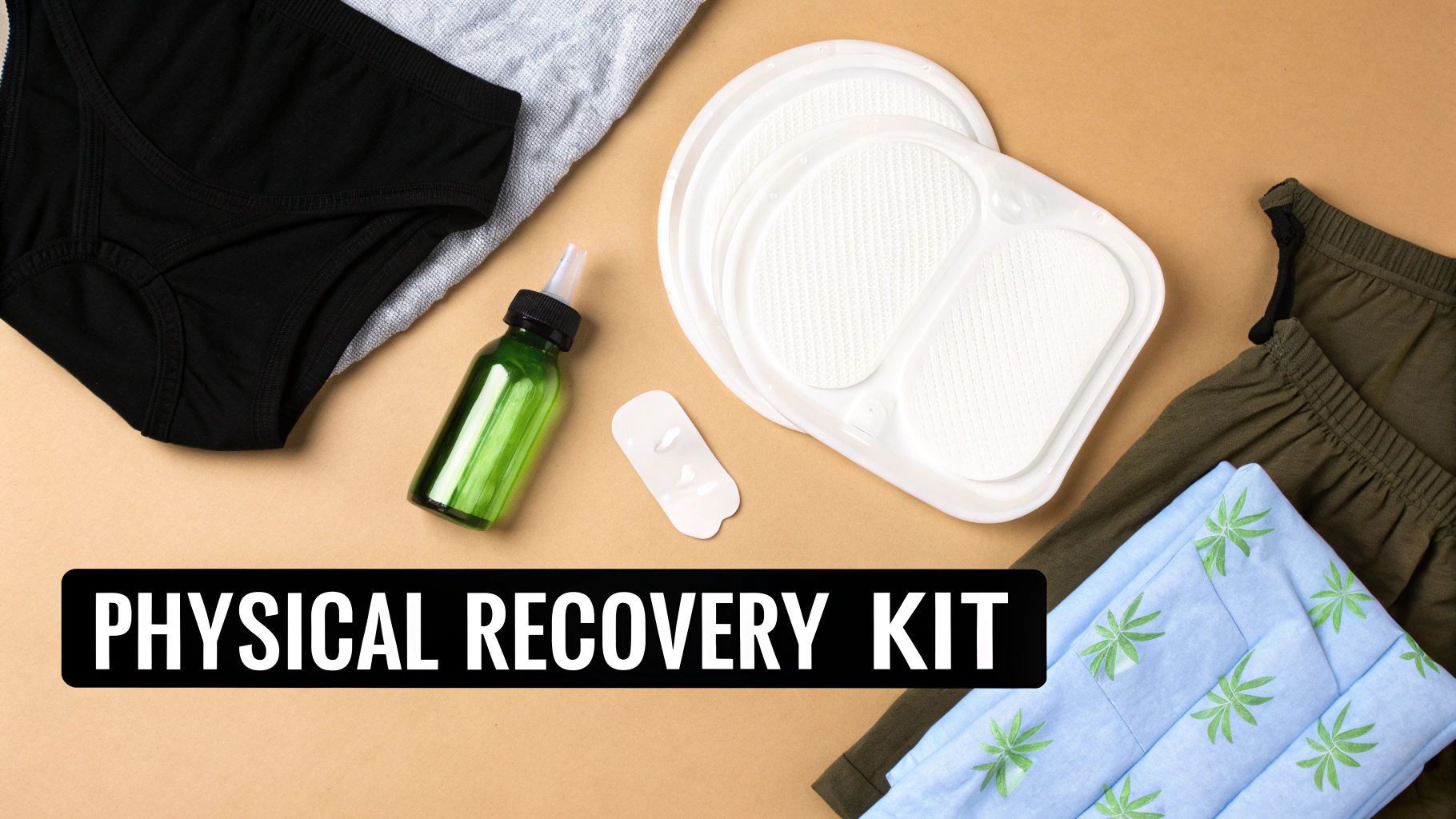
Your body just did something absolutely incredible, and now it’s time to give it some dedicated, gentle care. Think of your physical recovery like tending to a garden after a major storm—it needs patience, the right tools, and a soft touch. Let’s walk through the absolute non-negotiables for your physical postpartum recovery essentials toolkit, so you have everything on hand to heal with comfort and confidence.
These items aren't little luxuries; they are the fundamental tools that will get you through the healing process. Getting them ready ahead of time is one of the kindest things you can do for your future self. It lets you focus on resting and bonding with your new baby instead of scrambling to find what you need.
Perineal and C-Section Care Essentials
Whether you had a vaginal birth or a C-section, the area that brought your baby into the world needs some serious TLC. It's going to be tender and sensitive, and it requires a super gentle approach to stay clean and comfortable. Trying to rush this part of healing can easily lead to more discomfort and setbacks.
Your perineal care kit will be your absolute best friend in those early days. It’s all designed to keep the area clean without causing any irritation and to provide that sweet, soothing relief from swelling and soreness.
Key Perineal Care Items:
- Peri Bottle: This simple little squirt bottle is a total must-have. After giving birth, wiping with toilet paper can feel incredibly rough. The peri bottle lets you gently rinse the perineal area with warm water after using the bathroom, which feels amazing and keeps things hygienic.
- Witch Hazel Pads: These medicated pads are lifesavers for cooling and soothing a sore perineum. You can just line your maternity pad with them for continuous relief from swelling and any hemorrhoids that may have popped up.
- Sitz Bath: This is a shallow little basin that fits right over your toilet, allowing you to soak your perineum in warm water. This simple act can boost blood flow to the area, which really helps promote healing and provides some major relief from discomfort.
For moms recovering from a C-section, the focus is on keeping the incision clean and protected. You'll absolutely follow your doctor's specific instructions, but having gentle supplies ready to go is key. High-waisted underwear and loose, flowy clothing are especially important to avoid rubbing against that sensitive incision site.
The Magic of Comfortable Clothing
What you wear postpartum is about so much more than just style. It’s about function, pure comfort, and supporting a body that’s in full-on healing mode. Your regular clothes probably won't feel right for a little while, and that is completely and totally normal. Investing in just a few key pieces of comfy clothing can make a world of difference.
Think soft, breathable fabrics that won’t constrict you or irritate sensitive skin. Your body is fluctuating in size and sensitivity, so forgiving materials and flexible fits are your best friends right now.
Choosing comfort isn't giving up; it's giving your body the space and gentleness it needs to recover. Soft fabrics and forgiving waistbands are practical acts of self-care.
Must-Have Clothing Items:
- High-Waisted Underwear: It doesn’t matter if you had a vaginal birth or a C-section, high-waisted, soft cotton underwear is a postpartum staple. They're gentle on an incision and have enough room to comfortably hold those giant maternity pads in place.
- Nursing-Friendly Bras or Tanks: If you’re planning to breastfeed, seamless and supportive nursing bras or tanks are essential for easy access and comfort. Look for options without an underwire to help avoid clogged ducts.
- Soft, Loose Loungewear: We're talking soft joggers, cozy robes, and loose-fitting tops. You'll be spending a lot of time resting and cuddling your baby, and restrictive clothing is the absolute last thing you need to be dealing with.
These items create the perfect foundation for your postpartum wardrobe, letting you move, rest, and care for your baby without any extra physical discomfort from your clothes.
Simple Tools for Pain Management
Aches and pains are just part of the postpartum experience. Your uterus is contracting back down, your muscles are recovering from the marathon of labor, and you might feel sore from holding and feeding your baby in new positions. Thankfully, some really simple tools can provide major relief.
Managing this discomfort effectively helps you rest better, which is beyond crucial for your overall recovery. Having these items within arm's reach means you can tackle pain as soon as it starts. To see how small comforts can make a huge impact, check out the beautiful and practical options in our collection of insulated tumblers, perfect for keeping a soothing drink nearby.
Your Pain Relief Toolkit:
- Heating Pad: A heating pad can feel like a warm hug for your belly, soothing those uterine cramps (also known as afterpains) and easing back pain. The gentle warmth is fantastic for relaxing tense muscles.
- Ice Packs: For perineal swelling and soreness, cold packs are indispensable. You can find disposable perineal ice packs made just for this, or use reusable gel packs that you chill in the freezer. They help reduce inflammation and numb the area, giving you immediate relief.
Having both hot and cold therapy options on hand lets you tailor your pain relief to whatever your body needs in that moment. These simple, effective tools are a core part of any well-rounded collection of postpartum recovery essentials, helping you navigate the physical demands of healing with much greater ease.
6. Nourishing Your Body From the Inside Out
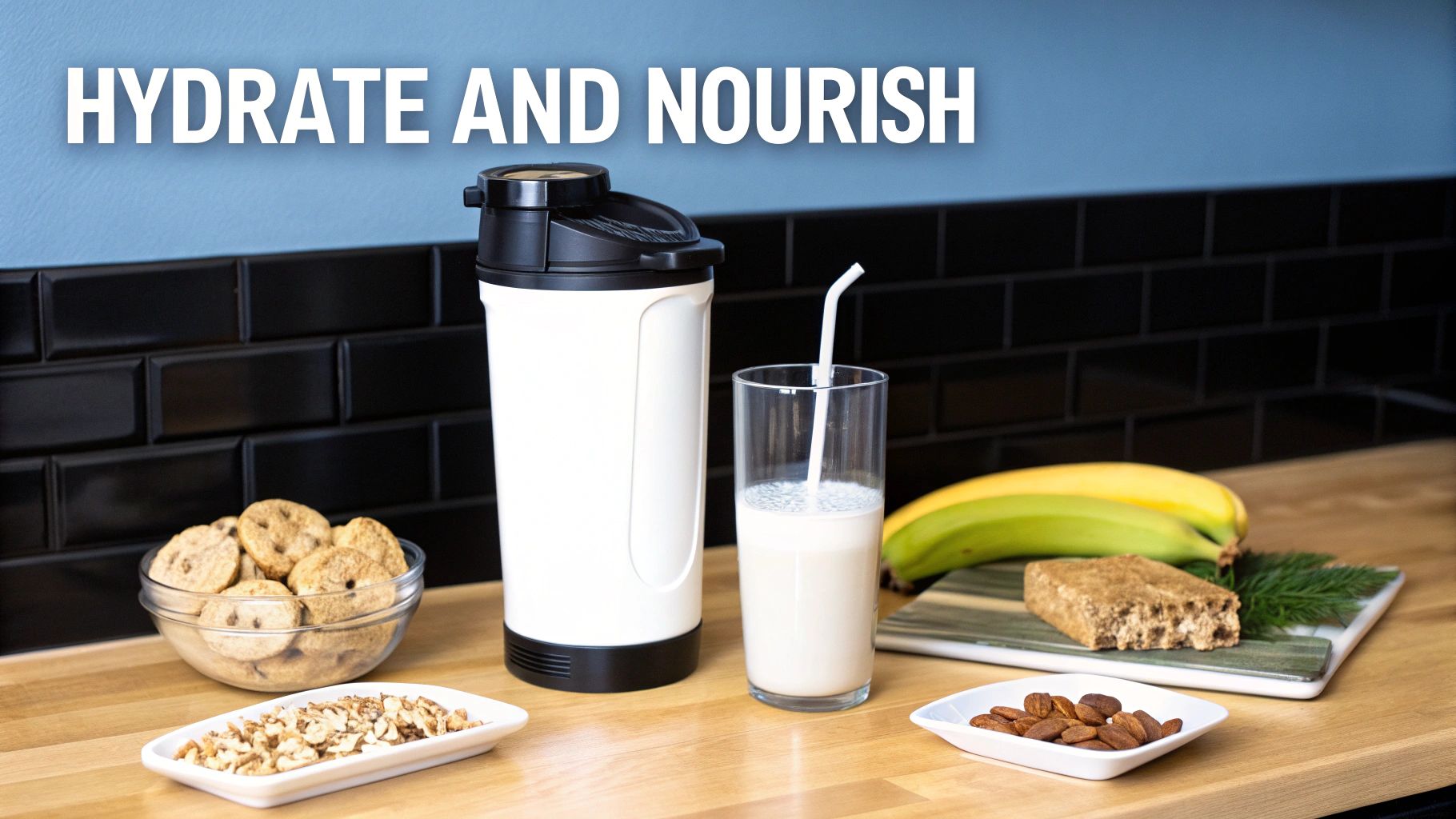
While things like perineal sprays and comfy robes take care of your body on the outside, a deep, lasting recovery is built from the inside. Your body is doing an incredible amount of work—healing tissues, making milk for a tiny human, and somehow functioning on snatches of sleep. Feeding it well is one of the most important things you can do for yourself in the fourth trimester.
Think of it this way: your body just ran a marathon. You wouldn't expect it to keep going on an empty tank. That’s why what you eat and drink isn't just a minor detail; it’s the very foundation of your healing, directly impacting your energy, your mood, and how quickly you bounce back.
The Undeniable Power of Hydration
Water is the quiet hero of postpartum recovery. It's working behind the scenes in almost every process, from repairing cells to keeping your hormones in check. When you’re hydrated, you’ll feel it—in your energy levels, in a clearer head (bye-bye, brain fog), and even in a more stable mood.
If you’re breastfeeding, hydration becomes even more crucial. Breast milk is about 88% water, so your body needs a steady stream to keep up with your baby’s appetite. Staying on top of your fluids helps maintain your milk supply and wards off the headaches and exhaustion that come with dehydration. The journey is demanding, and staying hydrated is a simple way to make it more manageable. You can read more about the profound link between motherhood and hydration in our founder's story.
Staying hydrated isn't just about quenching your thirst; it's about giving your body the fundamental tool it needs to heal, produce milk, and handle the beautiful chaos of new motherhood.
A little planning goes a long way here. Try setting up "hydration stations" around your house. Keep a big water bottle on your nightstand, one next to your nursing chair, and another in the living room. The goal is to make it so easy to grab a drink that you don't even have to think about it. A large, insulated tumbler can be a game-changer, keeping your water cold for hours and cutting down on trips to the kitchen.
Fueling Up with Nutrient-Dense Foods
Let’s be clear: postpartum nutrition is not about complicated diets. It’s about simple, wholesome foods that give you sustained energy and help your body heal. You need plenty of protein for tissue repair, healthy fats for brain function, complex carbs for energy, and iron to replenish what you lost during birth.
The reality of life with a newborn often means you’re eating with one hand while holding your baby. This is where easy, grab-and-go snacks become your best friend.
Easy, One-Handed Snack Ideas:
- Hard-boiled eggs: A protein powerhouse you can make ahead of time.
- Nut butter packets with apple slices: The perfect mix of healthy fats, fiber, and a little sweetness.
- Greek yogurt cups: Loaded with protein and great for your gut health.
- Trail mix: A handful of nuts, seeds, and dried fruit gives you a quick energy boost.
- Lactation cookies or energy bites: Many are made with oats, brewer’s yeast, and flaxseed to give your milk supply a little nudge.
To make this even simpler, here is a basic schedule you can adapt to your own routine.
Sample Daily Hydration and Nutrient-Rich Snack Schedule
| Time of Day | Hydration Goal | Easy Snack Idea |
|---|---|---|
| Upon Waking | 16 oz of water | N/A |
| Mid-Morning | 16 oz of water or herbal tea | Greek yogurt cup or a hard-boiled egg |
| Lunchtime | 16-24 oz of water | Add a side of sliced avocado to your meal |
| Mid-Afternoon | 16 oz of water | Handful of trail mix or a lactation cookie |
| Dinnertime | 16-24 oz of water | N/A |
| Evening/Bedtime | 16 oz of water or sleepytime tea | A few whole-grain crackers with cheese |
This is just a template—the key is to keep hydration and nourishment consistently on your radar throughout the day, especially during and after nursing sessions.
By focusing on nourishing your body from within, you’re not just surviving the fourth trimester; you're giving yourself the strength you need to thrive in it.
Taking Care of You: Your Emotional and Mental Well-Being
While we spend so much time focusing on healing our bodies, the emotional rollercoaster of the fourth trimester is just as intense, if not more so. Your hormones are doing a wild dance, sleep feels like a distant dream, and you’re suddenly responsible for a tiny, fragile human. It's a time filled with breathtaking love, but it can also be filled with moments of deep doubt and exhaustion.
Putting your mental health first isn't selfish—it's absolutely essential for a healthy recovery. Think of it as the foundation for everything else. When you feel emotionally steady, you're in a much better place to bond with your baby, handle the inevitable tough moments, and actually find joy in this new life.
It's Okay to Not Be Okay: The Postpartum Emotional Ride
Most new parents experience the "baby blues" in those first couple of weeks. You might find yourself crying for no reason, feeling anxious, or just plain overwhelmed. This is incredibly common and usually fades as your hormones start to settle down and you get a tiny bit more sleep.
But sometimes, those feelings don't go away. They might get stronger, signaling something more serious like postpartum depression (PPD) or postpartum anxiety (PPA). It’s so important to know that these are not your fault. They aren't a sign that you're failing. They're real health conditions, just like gestational diabetes, and they require and deserve real, compassionate care. Just talking about it and chipping away at the stigma is the first step toward feeling like yourself again.
Taking care of your mental well-being is one of the most important postpartum recovery essentials you can have. It is the foundation upon which you build your strength as a parent and as an individual.
It’s also crucial to remember that this recovery journey isn't a six-week sprint; it’s a marathon that can last for a full year or more. The statistics are sobering: a shocking 52% of US pregnancy-related deaths happen between 42 days and one year after birth, and mental health conditions are a leading cause. This really underscores how vital it is to have support long after those initial newborn checkups. A 2023 maternal health report has more on these critical findings.
Building Your Mental Health Toolkit
Just like you pack a bag with nursing pads and comfy clothes, you can create a toolkit for your emotional health. These aren't complicated, time-consuming strategies. They're simple, real-world practices you can have ready to go for when things feel overwhelming. The idea is to have them in your back pocket before you need them.
Practical Things You Can Do for Your Mental Health:
- Line Up Your People: Before the baby comes, figure out who your support system is. It could be your partner, a best friend, your mom, or a postpartum doula. Tell them exactly what would be helpful—maybe it's dropping off food, holding the baby so you can take a long shower, or just listening without offering advice.
- Just Write It Down: You don’t have to be a writer. Just scribbling down a few thoughts in a notebook each day can be a huge relief. It’s a way to get the jumble of feelings out of your head and can help you notice patterns in your mood.
- Keep a Calming App on Your Phone: When stress hits hard, a five-minute guided meditation can be a lifesaver. Apps like Calm or Headspace have short, easy exercises that can ground you. Having one downloaded means a moment of peace is just a tap away.
And remember, asking for professional help is a sign of incredible strength, not weakness. If you're feeling sad, anxious, or just not like yourself, and it's getting in the way of your life, reaching out to a therapist or your doctor is a brave and powerful next step. You don't have to go through this alone.
Your Postpartum Essentials Checklist for Hospital and Home
Alright, let's pull all this advice together into a practical, grab-and-go plan. Thinking ahead and getting organized for postpartum is one of the most powerful acts of self-care you can do. Consider this your personal roadmap to creating a healing space where you can rest, recover, and soak in those newborn moments.
We’re going to separate your postpartum essentials into two camps: what you need to pack in your hospital bag for the first few days, and what you should have waiting for you at home to create your perfect "recovery nest." This isn't just about having the right stuff; it's about giving yourself priceless peace of mind.
Packing Your Hospital Go-Bag
Your hospital bag is your personal toolkit for comfort and care. While the hospital supplies the absolute basics, bringing a few things from home can make a world of difference in how you feel. You'll likely be there for a couple of days, so pack things that will make you feel a little more human and a lot more comfortable.
- Extra-Long Phone Charger: Trust me on this one. Hospital outlets are almost always in the most inconvenient spots, and a long cord is non-negotiable for staying connected.
- Your Own Toiletries: The simple act of using your favorite face wash, moisturizer, and toothbrush can feel incredibly grounding after labor.
- Comfortable Clothing: Pack a soft robe, some nursing-friendly pajamas, and a pair of cozy, grippy socks or slippers. Loose, dark-colored loungewear will be your best friend.
- Perineal Care MVPs: The hospital will give you some items, but it's a great idea to bring your own preferred peri bottle and witch hazel pads just in case.
- Snacks and Drinks You Actually Like: Hospital food can be hit or miss. Pack some easy-to-eat snacks like granola bars or nuts, and definitely bring that insulated tumbler to keep your water cold.
Creating Your Recovery Nest at Home
When you get home, your only job should be to rest and bond with your baby. The key to making this happen is to prepare your space beforehand so everything you need is within arm's reach. Setting up a fully stocked "station" next to your bed or on the couch is a total game-changer.
Think of your home recovery station as more than just a convenience—it's your sanctuary. It’s a space intentionally designed so your only focus is healing your body and getting to know your new little one.
Must-Haves for Your Home Station:
- Hydration Hub: A large, insulated water bottle that you can keep filled at all times.
- Snack Stash: A basket loaded with nutrient-dense snacks you can eat with one hand.
- Healing Kit: Keep your perineal spray, maternity pads, pain relievers, and nipple cream all in one place.
- Comfort Crew: A cozy blanket, a good nursing pillow, and your favorite lip balm are non-negotiable.
- Easy Entertainment: Have a book, headphones for listening to podcasts, or a tablet cued up for when you get a quiet moment.
Beyond the physical items, your emotional well-being is the foundation of your recovery. This visual captures the pillars of support that are just as crucial as any item on your checklist.
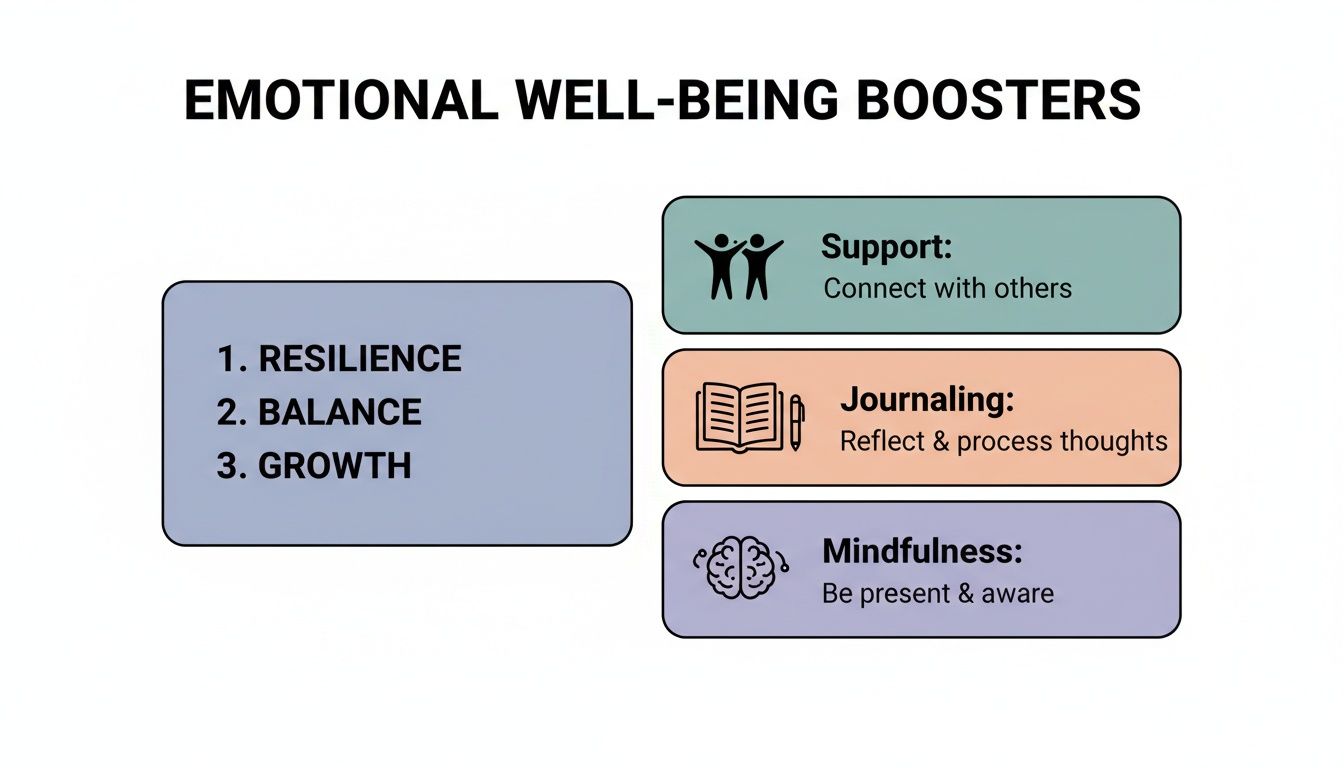
It’s a beautiful reminder that a solid support system, moments of reflection through journaling, and grounding mindfulness practices are what truly hold you up. When you prepare both your physical space and your emotional support plan, you're creating a holistic approach that will see you through the fourth trimester.
To make it even easier, here’s a clear breakdown of what to pack for your hospital stay versus what to have set up at home.
Postpartum Essentials Checklist: Hospital vs. Home
| Essential Category | Pack for Hospital | Prepare at Home |
|---|---|---|
| Hydration & Nutrition | Insulated tumbler, favorite tea bags, one-handed snacks (granola bars, nuts). | Fully stocked pantry, freezer meals, large water station, snack baskets in key spots. |
| Comfortable Clothing | Nursing-friendly pajamas/gown, robe, grippy socks, going-home outfit (loose!). | Several pairs of comfortable loungewear, high-waisted underwear, nursing bras/tanks. |
| Perineal Care | Your own peri bottle, witch hazel pads, comfortable underwear (disposable or dark-colored). | Full supply of maternity pads, perineal spray, sitz bath, donut pillow. |
| Pain Management | Any preferred over-the-counter pain relievers (check with your doctor). | Heating pad, ice packs, full supply of approved pain relievers. |
| Breastfeeding Support | Nursing pillow, nipple cream, nursing bra/tank. | Breast pump (cleaned & ready), milk storage bags, comfortable nursing chair/station. |
| Personal Items | Toiletries (toothbrush, face wash, lotion), lip balm, hair ties, extra-long phone charger. | Bedside cart with all essentials, books/headphones, journal and pen. |
| Mental Health Support | Contact list for your support system, a calming playlist. | A list of local support groups, therapist contact info, designated quiet space for mindfulness. |
Having this checklist helps ensure you won't be scrambling for something you need, whether you're in that hospital room or settling in at home. It’s all about making your recovery as smooth and peaceful as possible.
Your Recovery Is a Journey, Not a Destination
As we wrap up, I want you to hold one truth close to your heart: postpartum recovery is a deeply personal journey, and it unfolds at its own pace. There’s no universal timeline or finish line you’re supposed to sprint across. This is your path to heal, and it asks for one thing above all else: grace.
We've walked through a long list of postpartum recovery essentials, but the most important tool you have isn’t on any checklist. It’s the kindness you give yourself. Every item you’ve packed is more than just a thing; it's a tangible act of self-love, a way to honor the incredible, monumental work your body just did.
Embracing the Path Forward
Try to think of your recovery less as a race back to the "old you" and more as a gentle evolution into the person you are now becoming. This is a profound transformation, and it deserves to be treated with that kind of reverence.
Lean on the support system you've built. Let them help. Let them bring the meal, hold the baby while you nap, or just sit with you. You don't have to do this alone.
Remember, every single step forward is progress, no matter how small it feels. You are navigating one of the most demanding and beautiful transitions life has to offer.
Nourish your body with good food and lots of water, and nourish your soul with patience. You already have everything you need to walk this path beautifully, one day at a time. Acknowledge your strength, honor your healing, and please, give yourself permission to just be.
Your Postpartum Recovery Questions, Answered
It’s completely normal to have a million questions swirling around in your head after having a baby. You've been through a monumental experience, and now you're navigating a new body, a new life, and a whole lot of unknowns. Let’s tackle some of the most common questions new parents have, so you can feel a little more confident on this journey.
How Long Does Postpartum Recovery Really Take?
Okay, let's get real about this one. That six-week checkup often gets talked about like it's some magical finish line, but the truth is, full recovery takes much, much longer. Physically, it can be months before your body truly feels like its old self again. Mentally and emotionally, the adjustment to parenthood is a process that unfolds over the first year and beyond.
The single most important piece of advice? Don't compare your recovery timeline to anyone else's. Focus on listening to your body, celebrate the small wins, and give yourself so much grace. This is one of the most vital postpartum recovery essentials you can have.
What Are the Most Overlooked Essentials?
When you’re prepping for a baby, it’s easy to focus on diapers and onesies, but what about you? New parents often forget some of the most critical items for their own comfort and healing.
Here are three things that often get missed but can make a world of difference:
- A huge, insulated water bottle. Staying hydrated is non-negotiable. It helps with energy levels, healing, and milk supply if you're breastfeeding, but it's so easy to forget. Having a big bottle of cold water right by your side makes it effortless.
- Easy-to-eat, one-handed snacks. You're going to be holding a baby—a lot. You need fuel you can grab and eat without needing a fork and knife. Think protein bars, trail mix, or cheese sticks.
- A solid support system. This isn't something you can buy, but it's absolutely essential. Line up friends, family, or even a postpartum doula to help with meals, laundry, or just holding the baby so you can shower or nap.
Above all, trust your gut. While so many of the aches, pains, and emotional rollercoasters are a normal part of the process, some things aren't. Your well-being is the foundation your new family is built on—never hesitate to advocate for it.
When Should I Call My Doctor?
Knowing when to reach out for help can feel tricky, but there are some clear signs you shouldn't ignore.
On the physical side, call your doctor or midwife right away if you have a fever over 100.4°F, are bleeding heavily (soaking more than one pad an hour), or notice signs of a blood clot, like sharp pain or swelling in just one leg. For a more detailed breakdown of common questions, you might find our main Frequently Asked Questions page helpful.
For your mental health, please reach out for immediate help if you have any thoughts of harming yourself or your baby. If feelings of sadness, rage, or anxiety feel overwhelming and just won't let up, that's another crucial sign to call your provider. Reaching out isn't a sign of weakness—it's a sign of incredible strength.
Here at Rooted NJM, we believe that nurturing yourself is the very first step in nurturing your family. Our collection of insulated tumblers and mugs is designed to make staying hydrated feel like a small, beautiful act of self-care, supporting you through every step of your motherhood journey. Discover your new favorite tumbler today.
Enhanced by Outrank